


 Lead Times
  No Sales Tax
  Made in USA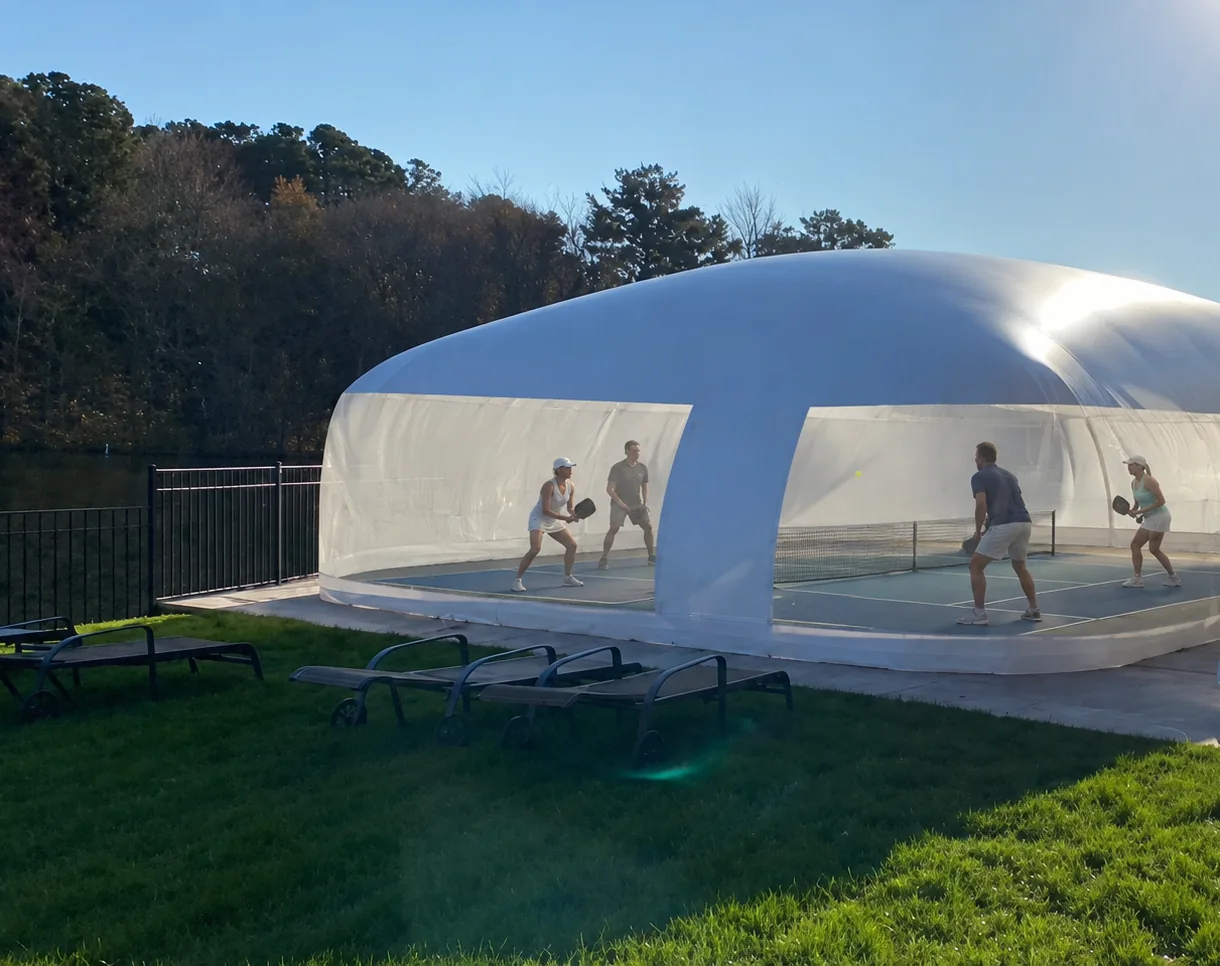
Residential
Best fit when the court is mainly for family games or casual backyard play and you want to keep the footprint compact.
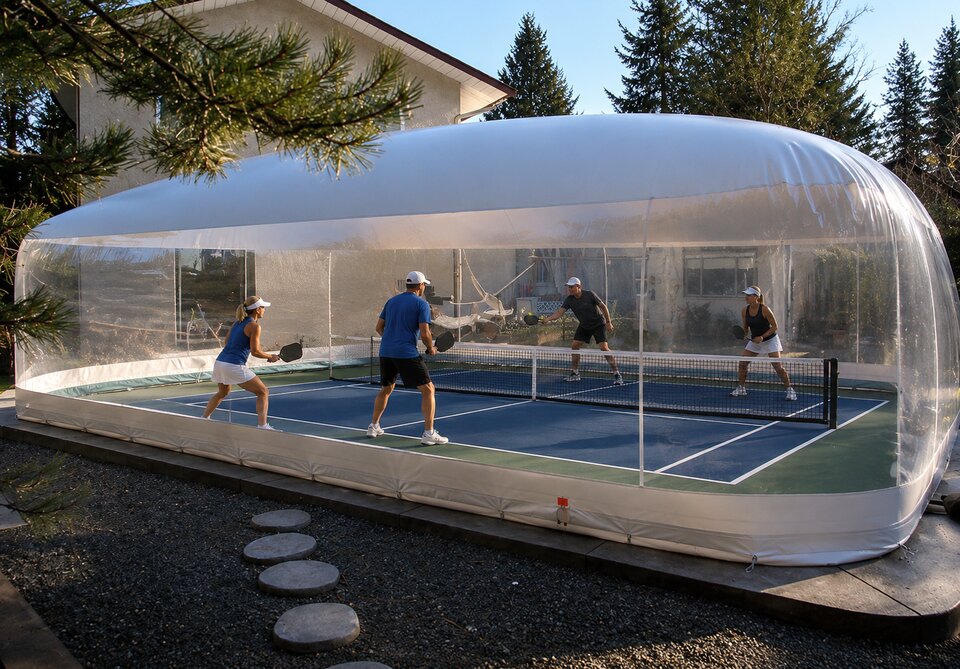
Choose a ready-to-order air-supported dome package sized for private pickleball courts, clubs, and recreational facilities.
A regulation pickleball court is 20 ft. x 44 ft., but the right dome size depends on the room you want around the lines. Some backyard courts need a tighter footprint, while clubs and more active players usually want extra side and baseline clearance.
The dome helps cut down on wind, rain delays, leaves, and court debris so the surface is easier to keep ready for play. Portable LED lighting can be added for early morning or evening games.
Each ready-to-order package encloses one court. Select the footprint based on the clearance you want around the playing lines.
Best fit when the court is mainly for family games or casual backyard play and you want to keep the footprint compact.
A better fit for regular games, drill sessions, or small clubs where players need more room to move around the court.
For stronger players, busy facilities, or anyone who wants extra chase room around wide shots and deep lobs.
Each size includes the core parts needed to set up and operate an air-supported pickleball court dome: the enclosure, L-zipper entry, blower, water-ballast anchoring, and water-management flap.
Air-supported court enclosure sized to the selected package footprint, with clear sidewall visibility for the court area.
The L-zipper entry gives players a straightforward way to enter and exit while the dome remains inflated, and a spare L zipper is included for future service.
The included blower maintains normal dome pressure during use. Setup details cover blower placement, air duct positioning, and the protective blower cover.
The perimeter anchoring system uses water ballast around the dome, with anchor points spaced about every 5 ft.
The included flap helps manage water along the base of the dome.
Custom Sport Domes can cover multiple pickleball courts, volleyball, tennis, basketball, small-sided soccer, and other activity areas. Available entry options include an L-zipper opening and an airlock system.
Sport Domes have also been used to shelter construction and other temporary work areas. See alternate Sport Dome uses.
For sustained wind forecasts approaching 40 MPH, plan to take the dome out of service temporarily. Deflate it, fold it carefully onto the court or move it off the court, and make sure the net or other equipment cannot puncture the fabric.
If the wind has already picked up, do not try to deflate the dome in the middle of the wind event. Keep the dome under normal blower pressure, keep people out of it if conditions are unsafe, and wait until the wind settles before handling the fabric.
Some properties may have fencing, walls, landscaping, or other fixed objects close to the dome. Optional protective curtains can help reduce rubbing where clearance is tight.
Each ready-to-order package is sized to enclose one pickleball court, with different amounts of clearance around the playing lines. Contact us about custom Sport Dome options if you need to cover multiple courts or a larger activity area.
The included water-ballast system anchors the perimeter at points spaced about every 5 ft. During sustained winds, an air-supported dome can gradually shift, sometimes called “walking.” Supplemental sandbags placed inside and outside the perimeter can help reduce that movement. They supplement the water ballast rather than replace it. Review the Weather & Site Notes when sustained winds are forecast to approach 40 MPH.
Blower power is expected to run about $30–$35 per month, depending on local electric rates.
Shipping is calculated by destination on the package review page. Select a package in the pricing section, then enter the destination ZIP or postal code to see the freight charge.
Permits are often not required for temporary structures, but local rules vary. Review the Weather & Site Notes, then check local requirements and available court clearance before ordering.