











 Lead Times
  No Sales Tax
  Made in USA
 Pool Dome Anchoring Options
Water tube ballast and cable anchors offer two ways to secure your Ameri-Dome. Compare deck installation, entrance options and ongoing care to find the right fit for your pool.
Select the anchoring system that fits your site. Both options are the same price.

Before You Select Your Anchoring
Deck Installation
Water ballast avoids perimeter deck-anchor holes and needs exterior tie-downs. Cable anchoring connects to sleeves drilled into the deck.
Entrance Options
Both systems work with zipper entrances. Cable anchoring also supports an airlock, while water ballast requires zipper entrances.
Ongoing Care
Water ballast needs fill-level and tube-condition checks. Cable anchoring has no water tube to maintain, but leaves anchor sleeves in the deck.
Water Tube Ballast: Fewer Holes in Your Deck
Water ballast avoids perimeter deck-anchor holes. Cable anchoring provides fixed attachment points in the deck. The right fit depends on your deck, entrance needs and maintenance preferences.
Deck Installation: Drilling Requirements
Water Tube Ballast No Perimeter Anchor Holes

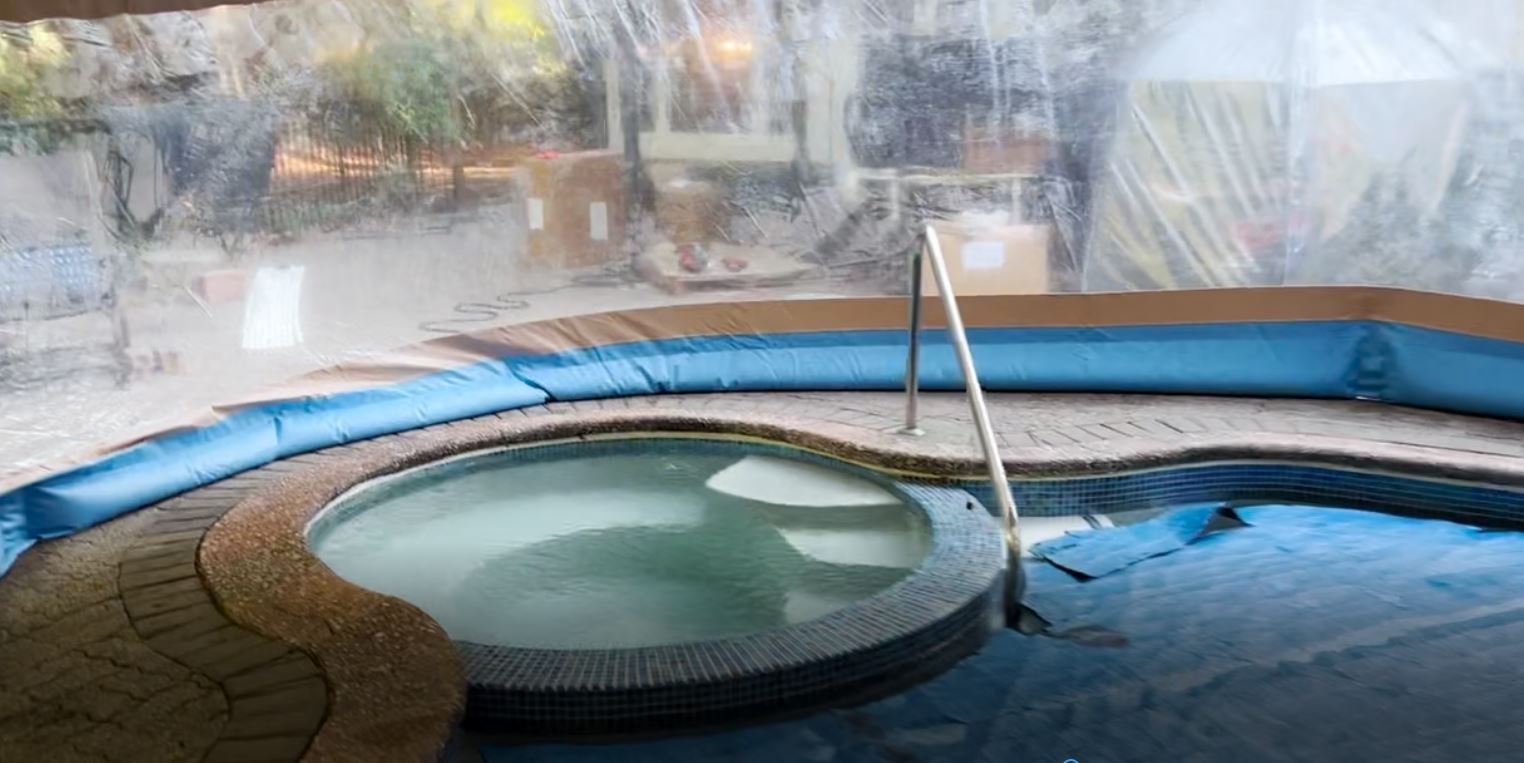
The water-filled tube rests on your deck, so you do not need to drill and install deck anchors every few feet around the dome.
This is an option for decorative concrete, tile, stone and pavers where you want to limit drilling. Exterior tie-downs are still required, with attachment points suited to your site.
Traditional Cable Anchors Drilled Deck Sleeves

Anchor sleeves are installed in holes drilled into a conventional concrete deck, generally about 3 feet apart in a typical residential installation. Eye bolts screw into those sleeves to connect the dome to the deck.
The eye bolts can be removed when the dome is taken down. The sleeves stay in the deck for the next installation.
How Each System Holds the Dome in Place
Water Tube Ballast Water Weight and Exterior Tie-Downs

A large water-filled tube sits inside a reinforced vinyl sleeve around the dome’s lower perimeter. Position the dome, then fill the tube so its weight holds the base against the deck.
Exterior tie-downs connect above the tube to help prevent gradual movement across the deck. Depending on your site, they may attach to ground anchors, suitable structural points or existing pool-cover anchors.
Traditional Cable Anchors Perimeter Cable and Deck Attachments

A heavy-duty cable built into the dome’s lower perimeter connects to eye bolts around the deck. The cable and deck anchors hold the dome in position through these fixed attachment points.
The dome connects at the installed deck-anchor locations, rather than relying on the weight of a water-filled tube. The necessary anchors, eye bolts and attachment hardware are supplied with the dome.
Entrance Options: Zippers and Airlocks
Water Tube Ballast Zipper Entrances
Water-tube domes use zipper entrances, which open directly through the dome wall and take up less deck space than an airlock. They cannot accommodate an airlock.
If zipper entrances fit your needs, either anchoring system is an option.
Traditional Cable Anchors Zipper or Airlock Entrances
Cable anchoring supports zipper entrances or an airlock. An airlock uses a separate entry enclosure, so allow room for it when planning your deck layout.
The Ameri-Dome Airlock Entry System provides ADA-compliant entry with room for wheelchair access.
Ongoing Care
Water Tube Ballast Check Water Levels and Tube Condition
Check the water level and refill when needed. Inspect the tube for thin spots or abrasion where it rests against the deck. Unchecked wear can lead to leaks.
In colder climates, use RV and marine antifreeze made with propylene glycol. Read more about water-tube care.
Traditional Cable Anchors Removable Eye Bolts, Permanent Sleeves
Cable anchoring has no water-filled tube to refill or protect from abrasion. When taking the dome down, the eye bolts can be unscrewed while the anchor sleeves stay in the deck.
Follow the cable-anchor installation instructions when attaching or removing the dome. The sleeves remain in your deck between installations.
How Each System Forms the Air Seal
Water Tube Ballast Water Weight Seals Against the Surface

Water-ballast domes do not use an interior air-seal flap. The weight of the water-filled tubes presses the dome’s base against the deck surface to form the air seal.
The tubes provide both the weight at the base and the seal against the surface. Exterior tie-downs are still required to help prevent the dome from moving across the deck.
Traditional Cable Anchors Air Pressure Seals an Interior Flap
Cable-anchor domes use a flat interior air-seal flap attached to the inside base of the dome. The flap extends onto the deck, where pressure from the running blower presses it against the surface to form the air seal.
The cable and deck anchors hold the dome in place. The interior flap provides the seal. This seal allows a small amount of air to escape, helping keep the air inside from becoming stagnant.
Which Anchoring System Fits Your Site?
Start with Your Deck
Water ballast limits perimeter drilling, but you still need suitable exterior tie-down locations. Cable anchoring uses drilled sleeves in a conventional concrete deck. See water-tube dome installation examples.
Consider Your Weather Exposure
Water ballast is not recommended for areas of severe wind. Consider the wind exposure around your pool before selecting anchoring.
Balance Entrances and Upkeep
Water ballast combines fewer perimeter holes with zipper entrances and regular tube care. Cable anchoring requires deck drilling, supports airlocks and has no water tube to maintain. Both systems are the same price.
Still deciding? You can select Undecided in your residential quote, place your order, and finalize anchoring with our help during project planning.
Start Your Residential Dome Quote